A professor builds a Digital Twin from their own course material. Students ask it anything, out loud or typed, at any hour, and it answers the way that professor teaches, with every source cited. When the course hasn't covered something, it says so and sends the question to the professor.
Not a chatbot pointed at a PDF folder. A Digital Twin is built with the professor, from their material, and it never speaks until it has earned their trust.
Syllabus, lectures, notes, slides, past exams. The professor dumps it all in; the Digital Twin studies the course the way a devoted TA would.
A short interview captures what the material can't: the professor's way of explaining, their notation, how much to hint before revealing, what matters most this term.
The Digital Twin must pass the professor's own verification test before a single student sees it. If it can't answer faithfully, it doesn't publish.
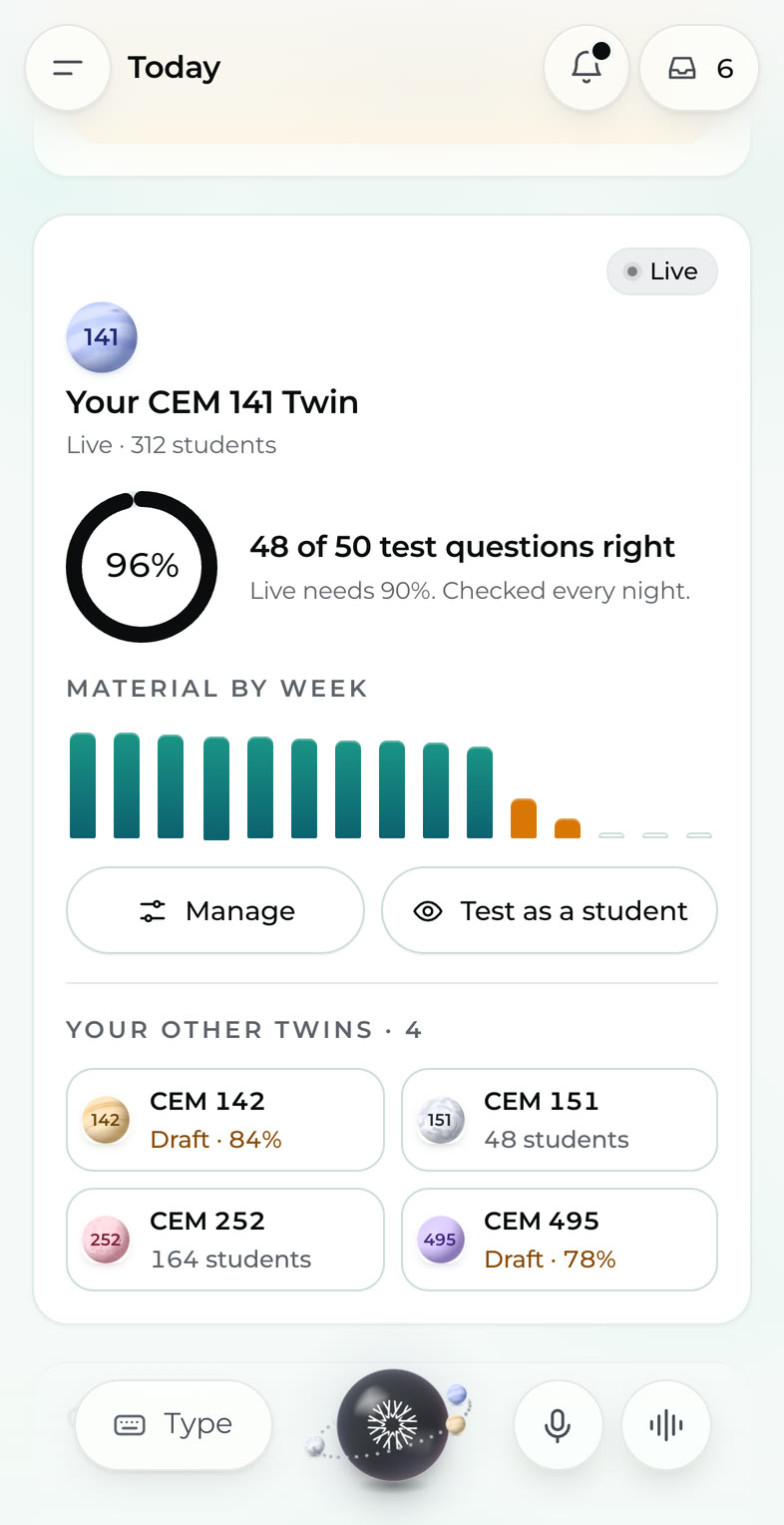
The professor writes the questions. The Digital Twin has to answer them from the course, faithfully, before any student sees it. Below 90 percent, it does not go live.
From the Vidya app.
A confident wrong answer under a professor's name is the one failure this product exists to prevent. Watch the contract at work.
The answer comes from approved course material, phrased the way this professor teaches it, with receipts. Tap a citation and you're looking at the slide it came from.
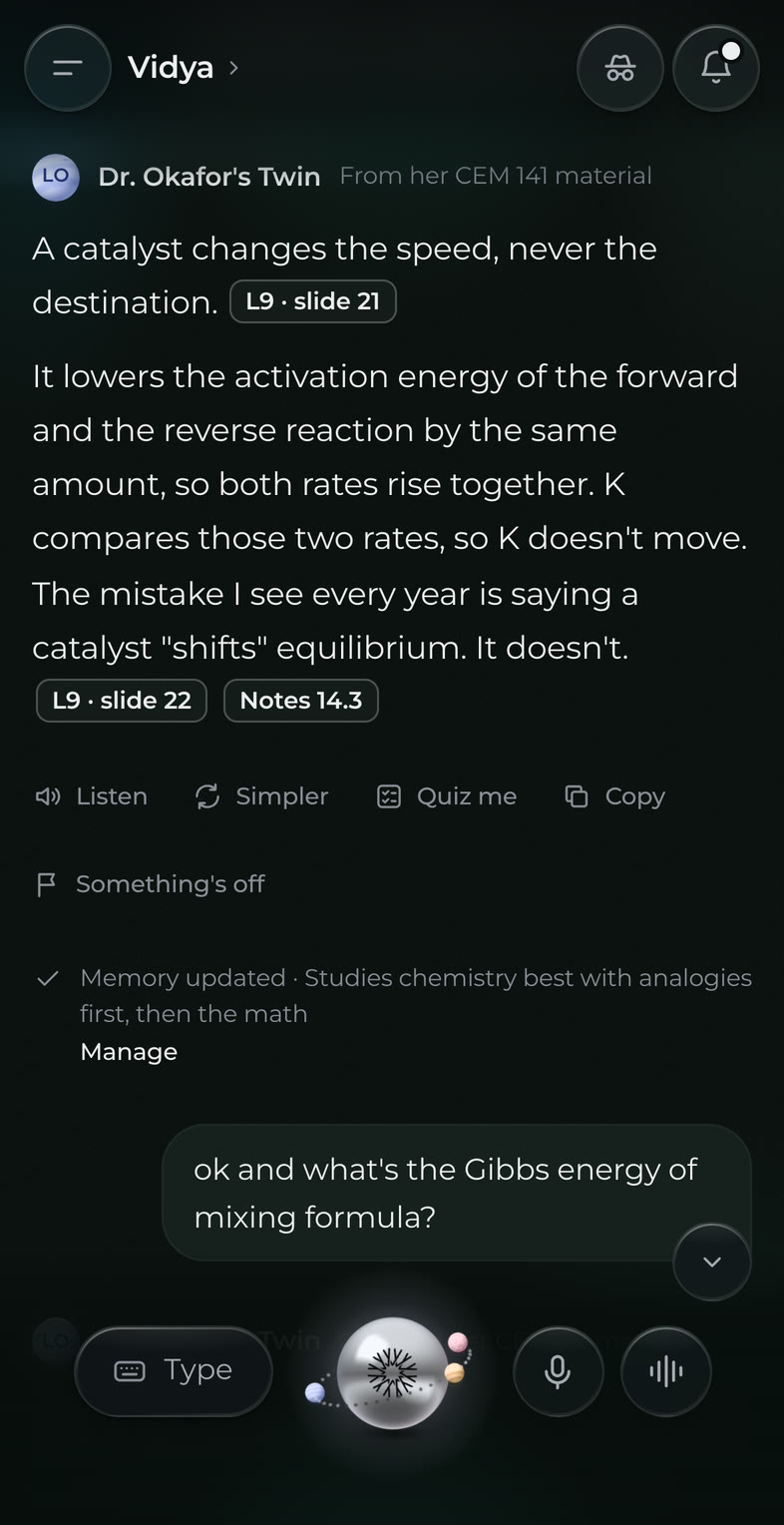
No improvising, no "probably." The refusal is labelled, the question goes to the professor, and the student knows exactly where they stand. Honesty is the feature.
Refusals and repeated questions roll up into one view no professor has ever been handed before: what the class actually needs next, with every student's identity behind a privacy wall.
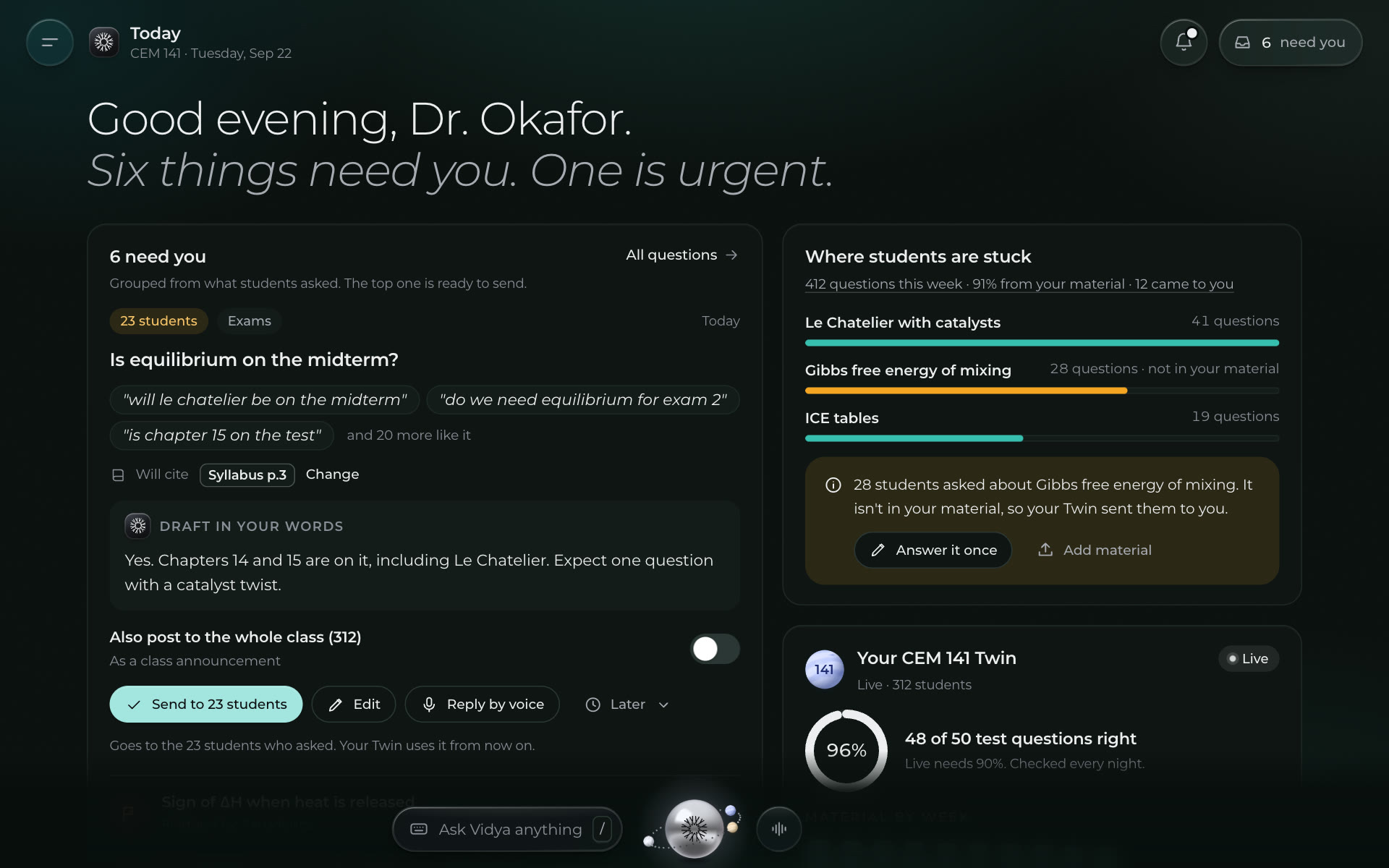
The Digital Twin refuses honestly: the question isn't covered by the course yet. That refusal is a signal, not a failure.
The question lands in their queue. They answer it the way only they can: a minute of their time, on their terms.
Once approved, the answer joins the course material. Every student who hits that wall after tonight walks straight through it.
The Digital Twin doesn't replace the professor. It multiplies them, and sends the hard questions home.
Twenty-three students asked the same thing twenty-three ways. The professor records one reply in their own voice. Every student hears it, with a transcript, and the Digital Twin keeps it for whoever asks next.
Voice gives the Digital Twin a mouth. Not a generic assistant voice: the professor's complete persona. How they explain, how they pause, the way they steady you before a hard step. Cloned with their consent, carried by Vidya, awake long after office hours end.
Ask your professor out loud, on the walk home. Answered in the voice that taught the course.
Anywhere · any hour · no appointmentYour Digital Twin is there for your students 24/7. It answers from your own course material, the way you teach it, with every answer cited. You approve what it knows, and anything you haven't covered comes straight back to you.
Join Beta